


Course structure
The Master's Degree is divided into two distinct curricula: 1) Portuguese-Italian Curriculum; 2) English-Italian curriculum. Students are required to select their preferred curriculum at the time of enrolment. The two curricula, as shown in the table below, include common core subjects and others that are specific to the chosen linguistic and cultural area.
Educational programme
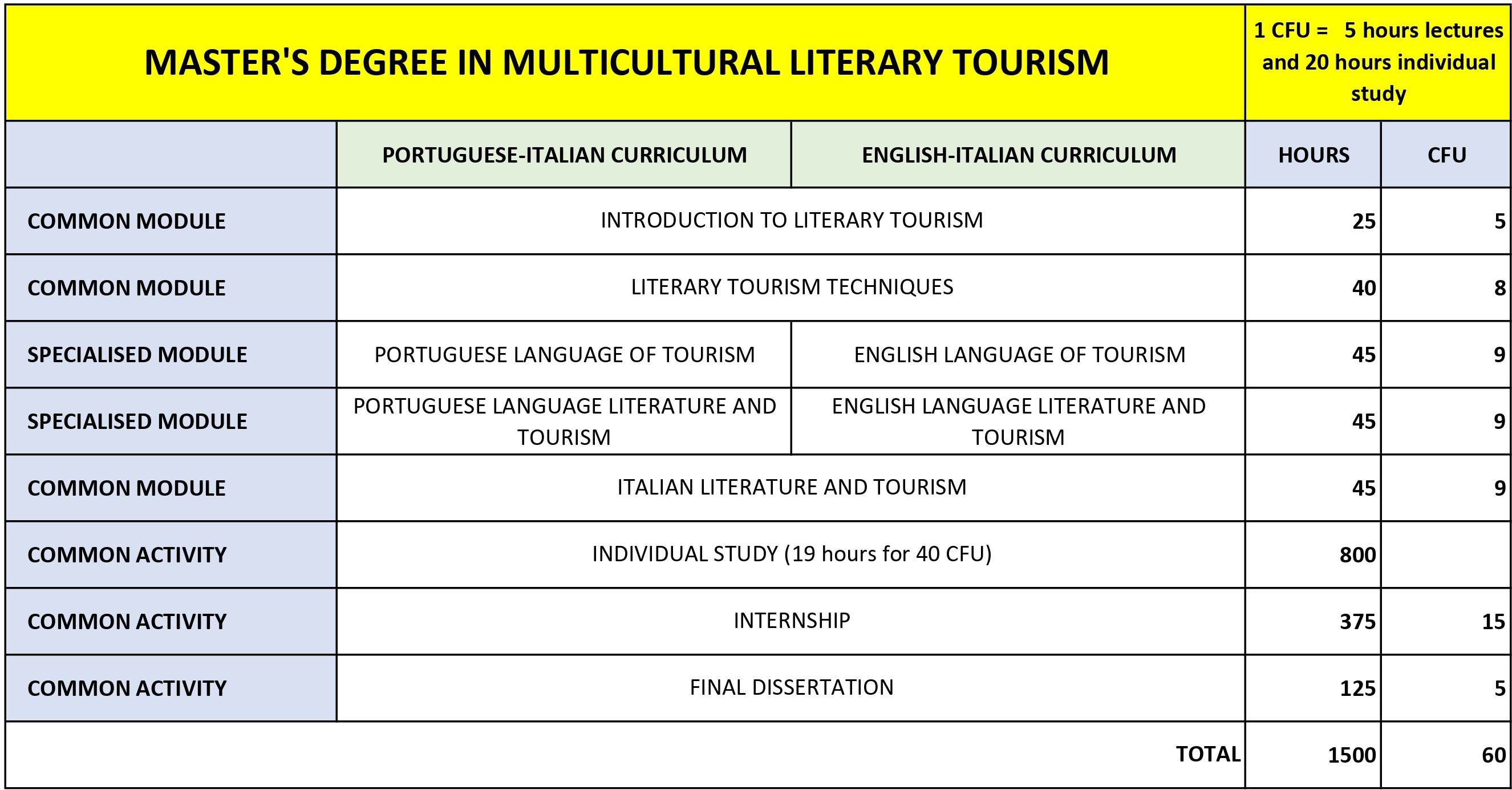
The Master's course begins with two common introductory modules. The first consists in theoretical introduction to the reality and specificities of literary tourism, while the second is an introduction to the technical realities (organisation, marketing and communication) of tourism (and literary tourism in particular). Following these modules, each curriculum delves into the peculiarities of the specific-sector language and looks at the potential for tourism exploitation of the literary heritage associated with that language. Finally, the same in-depth study is devoted to the reality of literary tourism in Italy.
A brief description of each module is available here:
 Teaching Modules Teaching Modules  |
Mode of delivery
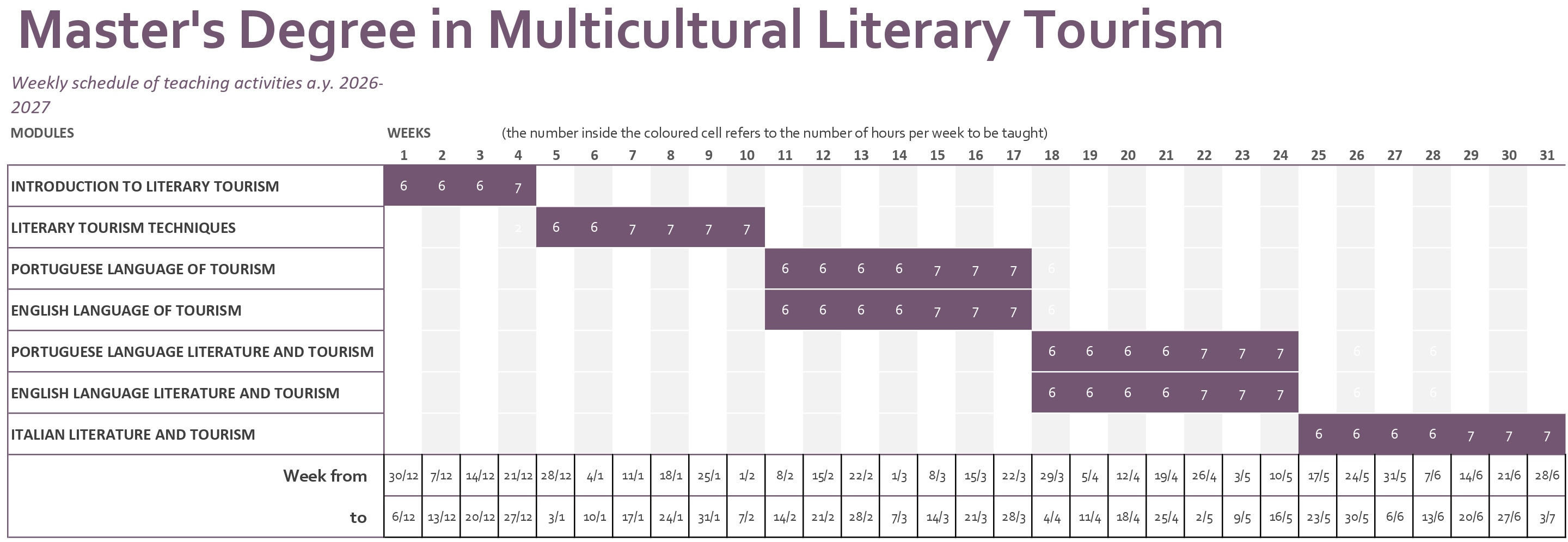
The course will be delivered entirely in e-learning mode, mostly in asynchronous format (provision of course materials, assigned activities, participation in forums). However, there will also be weekly meetings with students, in synchronous mode, to receive feedback on the week's content and to correct the assigned activities. We ask you to adhere to the deadlines for the delivery of the activities in order to avoid overlapping with the following week's content unit.
This is the calendar of teaching activities for the academic year 2026-2027:
At the end of each module, after completing the different assigned activities, students are required to pass an examination, which consists of an oral interview with the lecturer in charge of the module.
Internship
The Master's Degree in Multicultural Literary Tourism offers students the opportunity to participate in internships and project work (totallying 375 hours), which can be undertaken in Italy or abroad and which will provide hands-on experience in the world of literary tourism. During the internship, students will work with tourist boards, cultural institutions and non-profit organisations to develop projects that promote literary itineraries through different cultures and traditions.
These projects will give students the opportunity to apply classroom-acquired skills, from historical research to tourism promotion, creating unique experiences that celebrate literary heritage. Through practical activities, such as designing thematic itineraries and organising cultural events, students will contribute to the valorisation and dissemination of literary works in multicultural contexts.
The focus will be on innovation and sustainability in literary tourism, promoting an inclusive approach that respects different cultural identities. This training will prepare students to become skilled and creative professionals, ready to tackle challenges and seize opportunities in the dynamic field of literary tourism.
Final dissertation
The course concludes with a theoretical-practical dissertation, usually based on the student's internship. The dissertation is then presented and discussed before an examination board composed of the Master's teachers.
